
1. Introduzione
This manual provides instructions for the proper setup, operation, and maintenance of your Levenhuk 720B Binocular Microscope. Please read these instructions carefully before using the instrument to ensure correct usage and to prolong its lifespan. This microscope is designed for laboratory, clinical, and medical research applications.
2. Prodotto finitoview
The Levenhuk 720B is a binocular compound microscope featuring multiple objective lenses and eyepieces for various magnification levels. It includes a mechanical stage, LED illumination, and coarse/fine focusing mechanisms.

Figura 2.1: Fronte view of the Levenhuk 720B Binocular Microscope, showing the binocular head, objective lenses, mechanical stage, and base.
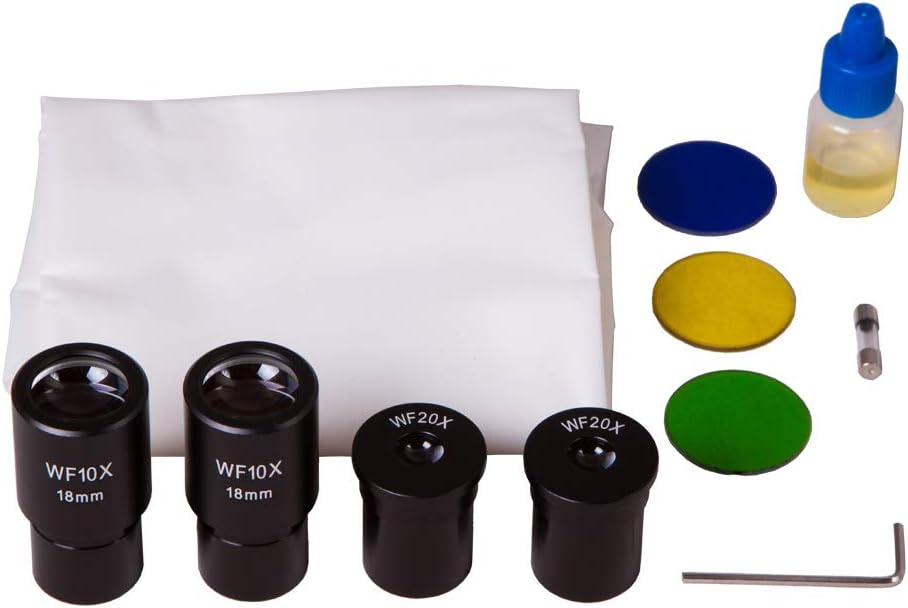
Figure 2.2: Included accessories: WF10x/18mm eyepieces (2), WF20x eyepieces (2), color filters (blue, yellow, green), immersion oil, cleaning cloth, hex key, and spare fuse.
3. Impostazione
- Disimballaggio: Rimuovere con cautela tutti i componenti dall'imballaggio. Conservare l'imballaggio originale per eventuali trasporti o rimessaggio futuri.
- Posizionamento: Posizionare il microscopio su una superficie stabile e piana, lontano dalla luce solare diretta, da temperature elevate, dalla polvere e dalle vibrazioni.
- Collegamento elettrico: Connect the power cord to the microscope's power input (AC100V-240V, 50/60Hz) located at the rear of the base, then plug it into a suitable electrical outlet. Ensure the power switch is in the OFF position before connecting.
- Installazione dell'oculare: Insert the desired eyepieces (e.g., WF10x) into the eyepiece tubes of the binocular head.
- Binocular Head Adjustment: If the binocular head is rotatable, adjust it to a comfortable viewposizione di avanzamento.
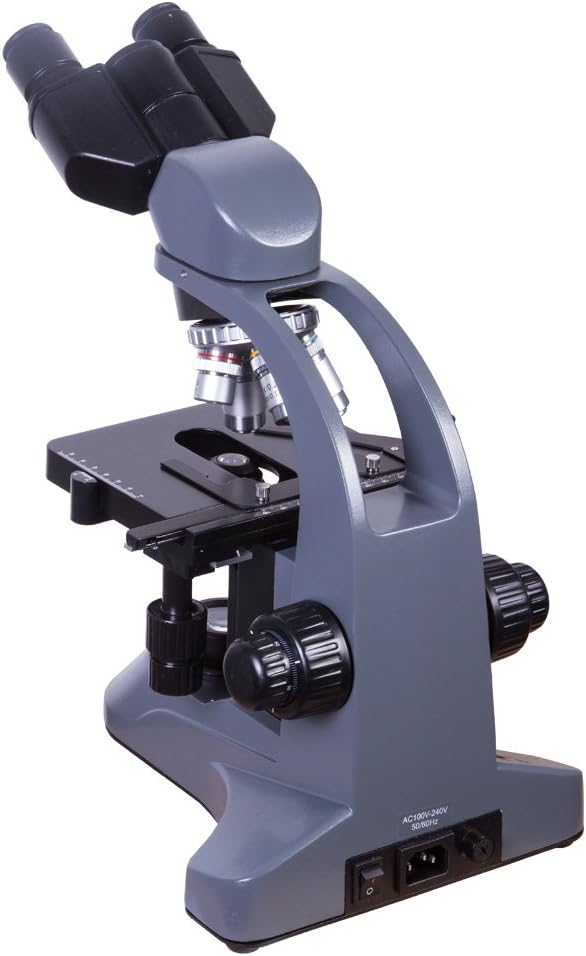
Figura 3.1: Posteriore view of the microscope showing the power input and switch.
4. Istruzioni per l'uso
- Accensione: Flip the power switch located on the rear of the microscope base to the ON position. Adjust the illumination intensity using the dimmer control.
- Posizionamento del campione: Place a prepared microscope slide onto the mechanical stage. Secure it with the stage clips. Use the stage control knobs to center the specimen area of interest over the condenser aperture.
- Selezione dell'ingrandimento: Rotate the revolving nosepiece to select the lowest power objective lens (e.g., 4x). Ensure the objective clicks firmly into place.
- Messa a fuoco:
- While looking through the eyepieces, use the manopola di messa a fuoco grossolana per mettere a fuoco approssimativamente il campione.
- Quindi, utilizzare il manopola di messa a fuoco fine for precise focusing until the image is sharp and clear.
- Regolazione dell'illuminazione:
- Regolare la luminosità utilizzando il controllo dimmer.
- Adjust the iris diaphragm lever on the condenser to control the amount of light reaching the specimen and improve contrast.
- Regolazione della distanza interpupillare: Adjust the distance between the two eyepiece tubes by gently pushing them together or pulling them apart until you see a single, circular field of view.
- Regolazione diottrica: If one eyepiece has a diopter adjustment ring, focus on the specimen with your dominant eye (usually the right eye) using only the fine focus knob. Then, close your dominant eye and use the diopter adjustment ring on the other eyepiece to focus for your non-dominant eye without touching the fine focus knob.
- Higher Magnification: Once focused at low power, rotate the nosepiece to a higher power objective. Only minor adjustments with the fine focus knob should be needed due to the parfocal design.
- Immersion Oil (for 100x objective): For the 100x objective lens, a drop of immersion oil must be placed directly on the specimen slide. Lower the objective into the oil carefully. After use, clean the 100x objective and slide thoroughly with lens cleaning solution.

Figura 4.1: primo piano view della meccanica stage with the condenser and iris diaphragm visible below.

Figura 4.2: View of the illuminated condenser and objective lens from below the stage.
5. Manutenzione
- Pulizia delle lenti: Use a soft, lint-free lens cleaning cloth and a specialized lens cleaning solution. Never touch optical surfaces with your fingers.
- Pulizia generale: Pulisci il corpo del microscopio con un panno morbido eamp stoffa. Evitare l'uso di detergenti o solventi abrasivi.
- Magazzinaggio: Quando non in uso, coprire il microscopio con una copertura antipolvere per proteggerlo da polvere e detriti. Conservare in un luogo asciutto e fresco.
- Sostituzione fusibile: If the illumination fails, check the fuse located near the power input. Replace it with a fuse of the same type and rating (a spare fuse is included).
6. Risoluzione Dei Problemi
| Problema | Possibile causa | Soluzione |
|---|---|---|
| Nessuna illuminazione | Power cord disconnected, power switch off, dimmer at minimum, blown fuse. | Check power connection, turn on switch, increase dimmer, replace fuse. |
| Immagine poco chiara/sfocata | Incorrect focus, objective lens dirty, eyepiece dirty, slide upside down. | Adjust focus, clean lenses, check slide orientation. |
| Campo oscuro di view | Iris diaphragm closed, low illumination, objective not clicked into place. | Open diaphragm, increase brightness, rotate nosepiece until objective clicks. |
| Two overlapping images | Distanza interpupillare errata. | Adjust interpupillary distance until a single field of view si vede. |
7. Specifiche
- Numero modello: 69656
- Marca: Levenhuk
- Ingrandimento massimo: 2000x
- Tipo di sorgente luminosa: GUIDATO
- Descrizione dell'obiettivo: Acromatico
- Angolo reale di View: 45 gradi
- Fonte di energia: Elettrico con cavo
- Voltage: 110 Volt
- Dimensioni del prodotto: 19.29 x 15.75 x 10.63 pollici
- Peso dell'articolo: 12.36 libbre (5.62 chilogrammi)
- Codice UPC: 611901504766
8. Garanzia e supporto
For warranty information and technical support, please refer to the documentation provided with your purchase or visit the official Levenhuk websito. Conservare la prova d'acquisto per eventuali reclami in garanzia.


