
SEPLOS 2A Active Balance
Manuale utente della Seplos 2A Active Balance Board
Model: SEPLOS 2A Active Balance
1. Introduzione
The Seplos 2A Active Balance Board is designed to enhance the performance and longevity of LFP (Lithium Iron Phosphate) and LiFePO4 lithium energy storage battery packs. It can operate independently or in conjunction with the Seplos BMS 3.0 system. Its primary function is to maintain cell consistency within the battery pack by actively balancing individual cell voltages, ensuring optimal charge and discharge cycles.
This manual provides comprehensive instructions for the setup, operation, maintenance, and troubleshooting of your Seplos 2A Active Balance Board.
2. Prodotto finitoview
The Seplos 2A Active Balance Board is a sophisticated electronic circuit board engineered for precise battery cell balancing. It features multiple balancing circuits, each capable of providing a 2A balance current. The board draws power directly from the battery pack it monitors.

Figura 2.1: Dall'alto verso il basso view of the Seplos 2A Active Balance Board, showing its compact design and various electronic components.

Figura 2.2: dettagliata view of the balance board with key connection points labeled, including dry contact port, power switch connector, power supply connector, and data collecting cables A and B.
Caratteristiche principali:
- Bilanciamento attivo: Provides up to 2A balance current per circuit to quickly equalize cell voltages.
- Compatibilità: Can be used as a standalone unit or integrated with Seplos BMS 3.0 systems.
- Funzionamento automatico: Initiates balancing when cell voltage thresholds are met, often triggered by a compatible BMS.
- Efficienza energetica: Draws minimal power directly from the battery pack for operation.
3. Configurazione e installazione
Proper installation is crucial for the safe and effective operation of the Seplos 2A Active Balance Board. Ensure all connections are secure and correct before powering on the system.
3.1 Precauzioni di sicurezza
- Always disconnect the battery pack from any loads or chargers before installation.
- Indossare dispositivi di protezione individuale (DPI) adeguati, tra cui guanti isolanti e protezioni per gli occhi.
- Ensure the work area is dry and free from conductive materials.
- Verify correct polarity for all connections to prevent damage to the board or battery.
3.2 Fasi di connessione
- Preparare il pacco batteria: Ensure all individual cells in your LiFePO4 battery pack are at a safe voltage level and are properly arranged.
- Collegare i cavi di bilanciamento: Connect the provided balance wires from each cell tap point to the corresponding ports on the active balance board. Refer to Figure 3.1 for a visual guide. Ensure the wires are connected in the correct sequence (e.g., B-, B1, B2, ..., B+).
- Collegare l'alimentazione: Connect the main power supply wires from the battery pack to the designated power supply connector on the balance board.
- Integrate with BMS (Optional): If using with a Seplos BMS 3.0, connect the data collecting cables (A and B) and the dry contact port as per the BMS manual's instructions. This allows the BMS to signal the balance board to begin operation.
- Power Switch Connection (Optional): If desired, connect an external power switch to the power switch connector for manual control.
- Proteggere la scheda: Mount the balance board securely within your battery enclosure or system, ensuring adequate ventilation and protection from environmental factors.
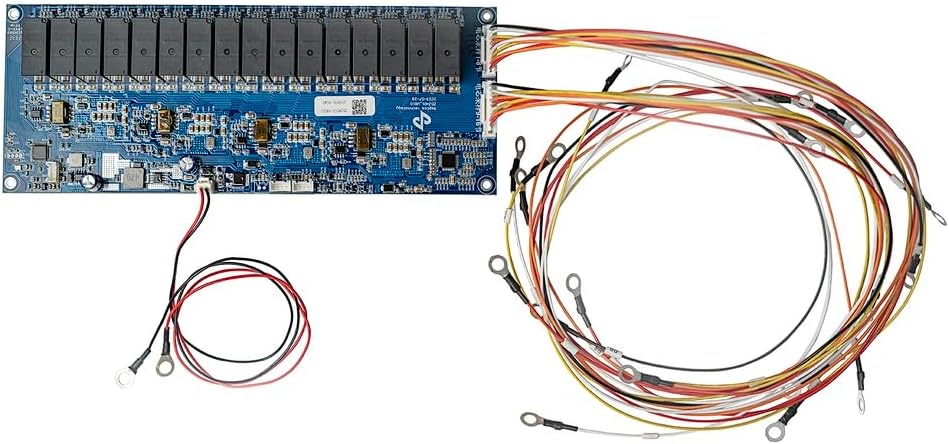
Figure 3.1: The Seplos 2A Active Balance Board shown with its accompanying connection wires, illustrating the numerous cell tap points.
4. Istruzioni per l'uso
The Seplos 2A Active Balance Board operates largely automatically once properly installed and connected. Its primary function is to equalize the voltage of individual cells within a battery pack.
4.1 Bilanciamento automatico
When connected to a battery pack, the balance board continuously monitors the voltage of each cell. If a voltage difference between cells exceeds a predefined threshold, the active balancing process will automatically initiate. The board will draw energy from higher-voltage cells and transfer it to lower-voltage cells until all cells are within an acceptable voltage gamma.
If integrated with a Seplos BMS 3.0, the BMS will send a signal to the balance board when balancing is required, optimizing the balancing process based on the overall battery management strategy.

Figure 4.1: Conceptual diagram showing how the active balance board equalizes cell voltages trasferendo energia da volumi più elevatitage celle per abbassare il volumetage cellule.
4.2 Indicators (if applicable)
Some versions of the board may include LED indicators to show balancing status or power. Refer to the specific product documentation for your board model for details on indicator behavior.
5. Manutenzione
The Seplos 2A Active Balance Board is designed for minimal maintenance. However, periodic checks can help ensure its long-term reliability.
- Ispezione visiva: Ispezionare periodicamente la scheda per verificare la presenza di eventuali segni di danni fisici, collegamenti allentati o corrosione.
- Pulizia: Keep the board free from dust, dirt, and moisture. Use a soft, dry brush or compressed air to gently clean the surface if necessary. Do not use liquid cleaners.
- Ventilazione: Ensure the board is installed in an area with adequate airflow to prevent overheating, especially during active balancing.
- Integrità della connessione: Verify that all wire connections remain secure and have not loosened over time due to vibration or temperature changes.
6. Risoluzione Dei Problemi
If you encounter issues with your Seplos 2A Active Balance Board, refer to the following common troubleshooting steps:
| Problema | Possibile causa | Soluzione |
|---|---|---|
| Board not active / No balancing |
|
|
| Overheating of the board |
|
|
| Inaccurate cell voltage readings (if monitored externally) |
|
|
If the problem persists after attempting these solutions, please contact Seplos customer support for further assistance.
7. Specifiche
| Caratteristica | Dettaglio |
|---|---|
| Nome del prodotto | Seplos 2A Active Balance Board |
| Numero di modello | SEPLOS 2A Active Balance |
| Tipi di batterie compatibili | LFP, LiFePO4 Lithium Energy Storage Batteries |
| Corrente di equilibrio | Up to 2A per circuit |
| Compatibilità | Standalone or with Seplos BMS 3.0 |
| Materiale | Alloy Steel (Board components) |
| Peso dell'articolo | 0.75 chilogrammi |
8. Garanzia e supporto
Per informazioni sulla garanzia e assistenza tecnica, consultare la documentazione fornita con l'acquisto o contattare direttamente il produttore. Conservare la prova d'acquisto per eventuali reclami in garanzia.
Manufacturer: seplos
Ask a question about this manual
Ask about setup, troubleshooting, compatibility, parts, safety, or missing instructions. Manuals+ will review the question and use this page’s manual context to help answer it.