
DATOUBOSS 12V100A-G24-3PC
Manuale utente della batteria DATOUBOSS 12V 100Ah LiFePO4
Model: 12V100A-G24-3PC
Deep Cycle Mini Lithium Battery with Built-in 100A BMS and Low-Temp Protection
Introduzione
Thank you for choosing the DATOUBOSS 12V 100Ah LiFePO4 Deep Cycle Battery. This manual provides essential information for the safe and efficient use of your battery. Please read it thoroughly before installation and operation to ensure optimal performance and longevity.
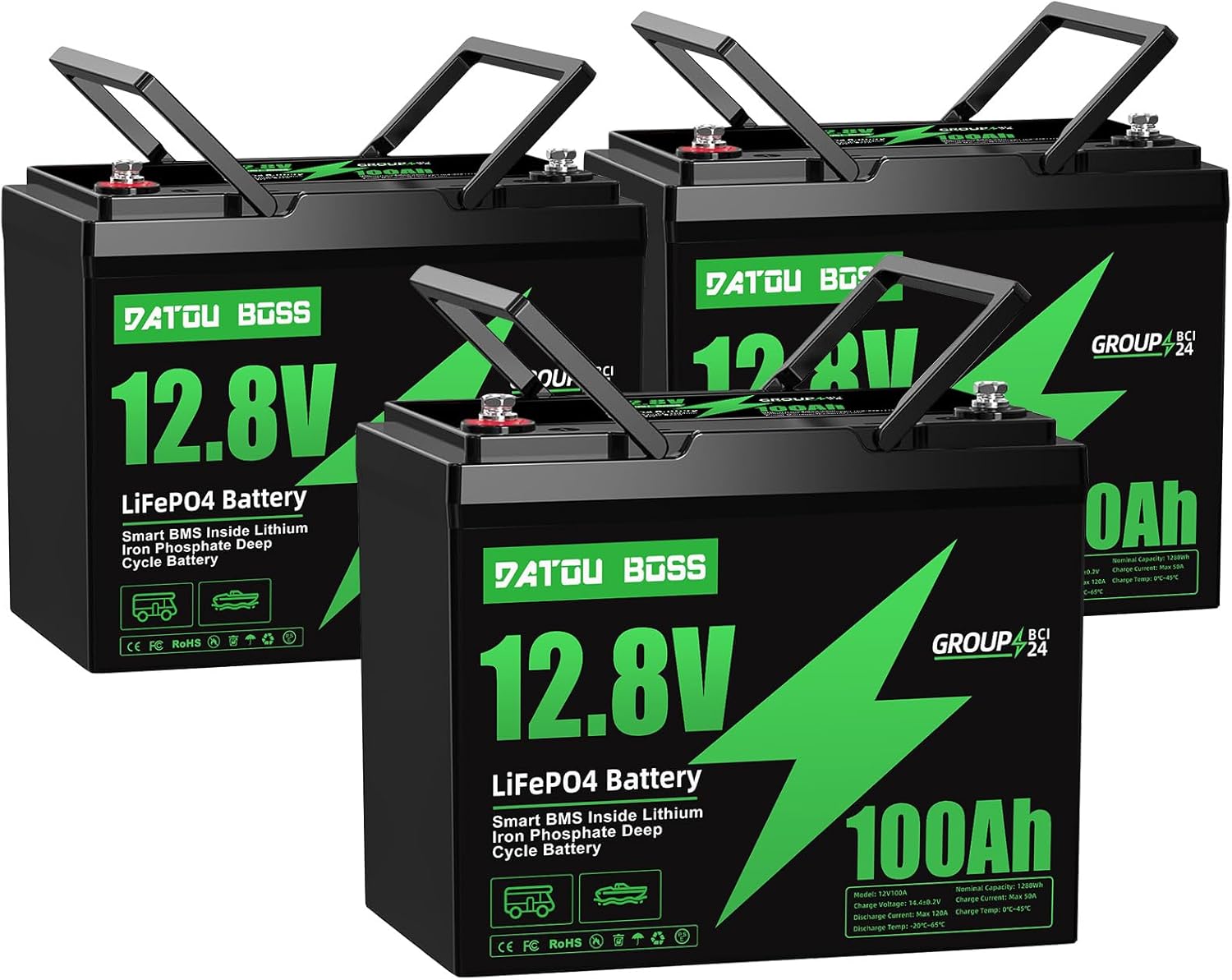
Figure 1: Three DATOUBOSS 12V 100Ah LiFePO4 Deep Cycle Batteries. This image displays three DATOUBOSS 12V 100Ah LiFePO4 deep cycle batteries, highlighting their compact design and terminal connections.
Caratteristiche del prodotto
- Excellent Performance & Safety Upgrade: High energy density design, half the weight of traditional lead-acid batteries with stronger performance. Built-in intelligent BMS (Battery Management System) provides comprehensive protection including short circuit, overvoltage, overheating, and overcharge protection.
- Long Lifespan & High Cycle Count: Service life of up to 10 years with a 5-year warranty. Offers 4000-15000 cycles, significantly more than lead-acid batteries.
- Espansione flessibile: Supports multiple batteries in series and parallel. Up to 16 batteries can be connected to form a 4-series 4-parallel (4S4P) system, achieving an output capacity of 12.8V to 51.2V and a power output of 1.28kW to 20.48kW.
- Wide Application Scenarios: Ideale per camper, camping, solar systems, off-grid power, boats, electric carts, backup power supplies, and more.
- Adattabilità alla temperatura: Excellent discharge performance ranging from -4°F to 140°F.
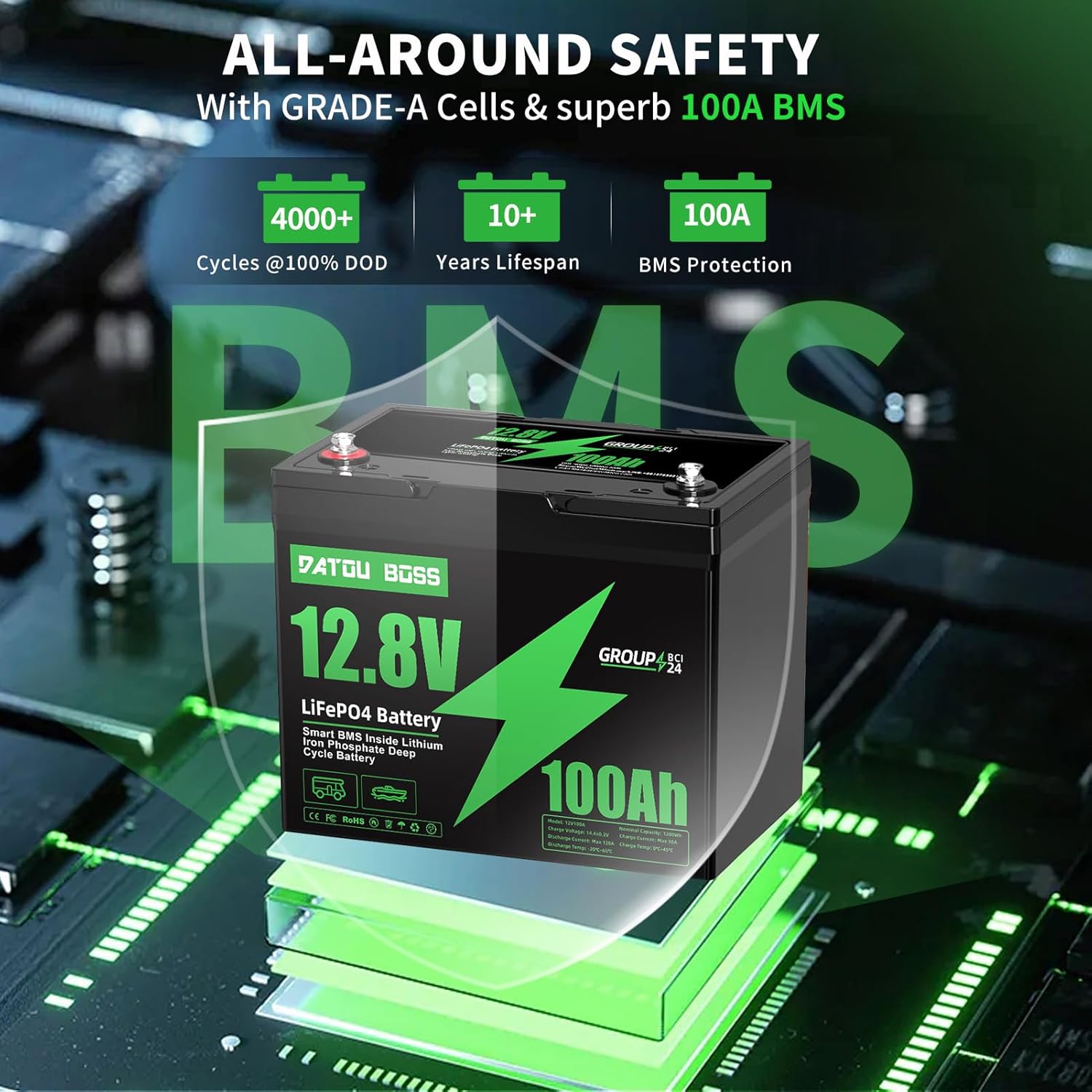
Figure 2: All-Around Safety with 100A BMS. Illustration emphasizing the all-around safety features of the DATOUBOSS LiFePO4 battery, including its built-in 100A BMS (Battery Management System) for protection, 4000+ cycles, and 10+ years lifespan.
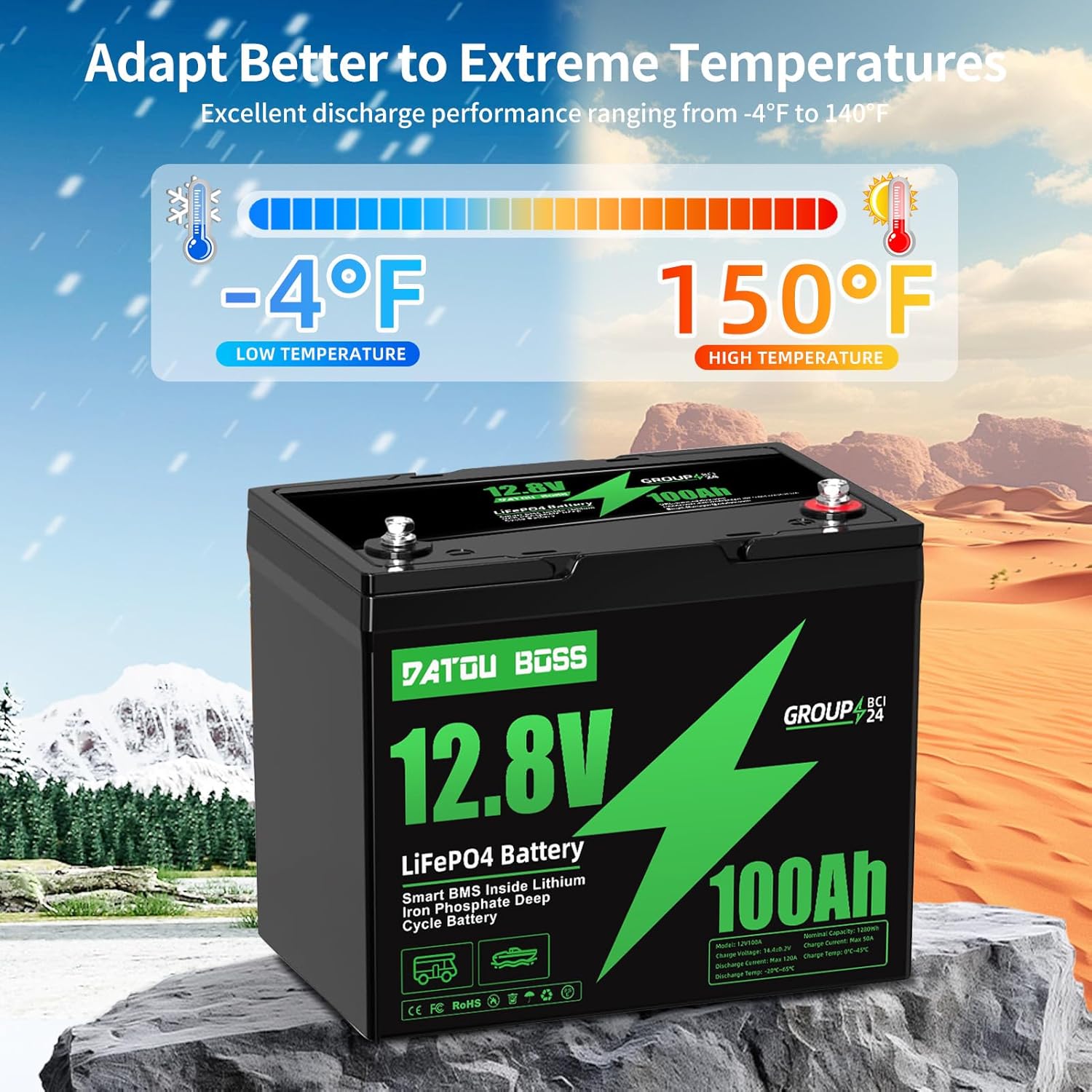
Figure 3: Adaptability to Extreme Temperatures. This image demonstrates the battery's ability to adapt to extreme temperatures, with an excellent discharge performance range from -4°F to 140°F.
Specifiche
| Attributo | Valore |
|---|---|
| Marca | DATOUBOSS |
| Numero di modello | 12V100AH-Group24-3PC (DT-12V 100AH) |
| Voltage | 12V |
| Capacità | 100 Ah |
| Tipo di batteria | LiFePO4 (fosfato di ferro e litio) |
| BMS integrato | 100A |
| Ciclo di vita | 4000-15000 cicli |
| Durata | Fino a 10 anni |
| Protezione a bassa temperatura | SÌ |
| Intervallo di temperatura di esercizio | -4°F a 140°F |
| Peso | Circa 24 libbre (10.92 kg) |
| Dimensioni | Circa 10.2 pollici x 6.6 pollici x 8.5 pollici |
| Codice UPC | 758209538502 |
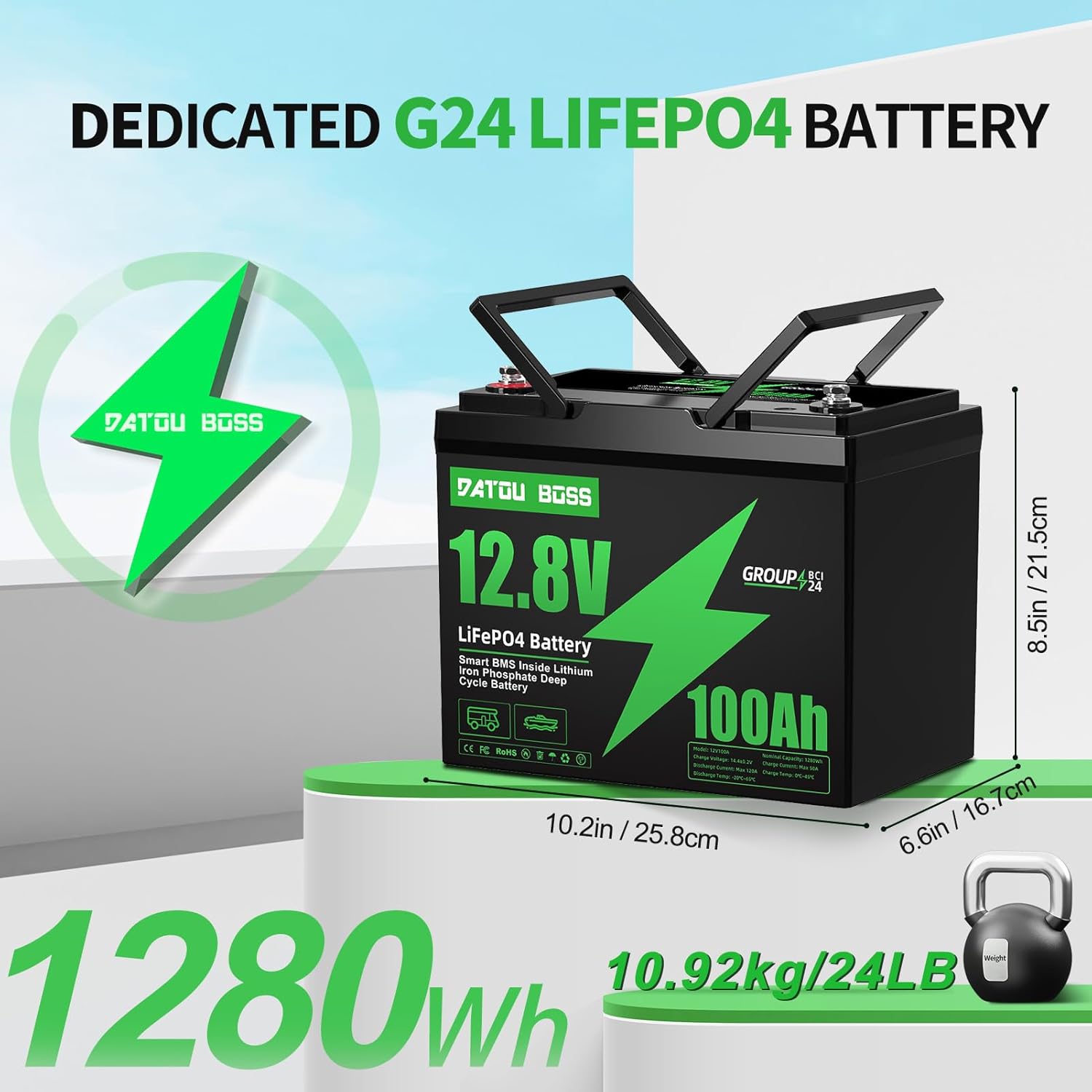
Figure 4: Battery Dimensions and Weight. Detailed view of the DATOUBOSS 12V 100Ah LiFePO4 battery, showing its dimensions (10.2in x 6.6in x 8.5in) and weight (10.92kg / 24LB), along with its 1280Wh energy capacity.
Cosa c'è nella scatola
- 12V 100Ah LiFePO4 Battery (Quantity as per package, e.g., 3PC for this model)
Configurazione e installazione
1. Controlli pre-installazione
- Ispezionare la batteria per eventuali danni fisici.
- Assicurarsi che tutti i collegamenti siano puliti e privi di corrosione.
- Verificare il volumetage of the battery before connecting to your system.
2. Collegamenti in serie e in parallelo
The DATOUBOSS LiFePO4 battery supports flexible expansion by connecting multiple units in series and/or parallel to achieve desired voltage and capacity. Always ensure all batteries are at a similar state of charge before connecting them in parallel.
- Connessione parallela: Connect positive terminals together and negative terminals together to increase capacity (Ah) while maintaining the same voltage(V).
- Collegamento in serie: Connect the positive terminal of one battery to the negative terminal of the next battery to increase voltage (V) mantenendo la stessa capacità (Ah).
- Configurazione massima: Up to 16 batteries can be connected in a 4-series 4-parallel (4S4P) configuration.

Figure 5: Flexible Capacity Expansion. Diagram illustrating how multiple DATOUBOSS LiFePO4 batteries can be connected in series and parallel (up to 4S4P) to expand system capacity and voltage, suitable for solar power systems and various loads.
3. Linee guida per il cablaggio
- Use appropriate gauge wiring for your application to prevent overheating and voltage goccia.
- Ensure all connections are tight and secure to prevent arcing and ensure efficient power transfer.
- Always connect the battery to a compatible charge controller or inverter.
Istruzioni per l'uso
1. Carica della batteria
La batteria LiFePO4 DATOUBOSS può essere caricata utilizzando diversi metodi:
- Pannello solare: Connect to a compatible solar charge controller (MPPT or PWM) designed for LiFePO4 batteries.
- Caricabatterie: Use a dedicated LiFePO4 battery charger. Do not use lead-acid chargers unless they have a specific LiFePO4 mode.
- Generatore: Connect through an appropriate AC-to-DC charger or inverter/charger system.

Figure 6: Charging Methods. Visual guide demonstrating three common methods for charging the DATOUBOSS LiFePO4 battery: using solar panels, a dedicated battery charger, or a generator.
2. Discharge and Usage
- The battery offers a stable discharge curve and up to 95% capacity utilization.
- The built-in BMS protects against over-discharge, ensuring the battery's longevity.
- Compatible with most inverters and solar systems on the market.

Figure 7: Powering Various Devices. This image shows the DATOUBOSS LiFePO4 battery providing power for various appliances like a fan, refrigerator, coffee maker, and microwave in an RV setting, demonstrating its long-lasting and durable energy supply.
Manutenzione
- Ispezione regolare: Periodically check battery terminals for cleanliness and tightness.
- Magazzinaggio: If storing the battery for an extended period, ensure it is charged to approximately 50-70% capacity and stored in a cool, dry place. Avoid extreme temperatures.
- Pulizia: Use a dry cloth to clean the battery casing. Non utilizzare solventi o detergenti abrasivi.
- Evitare scariche profonde: Sebbene il BMS protegga dalla scarica eccessiva, è buona norma ricaricare tempestivamente la batteria dopo una scarica significativa.
Risoluzione dei problemi
Se riscontri problemi con la batteria LiFePO4 DATOUBOSS, prendi in considerazione i seguenti passaggi comuni per la risoluzione dei problemi:
- Batteria non in carica:
- Controllare che tutti i collegamenti dei cavi siano ben saldi e che la polarità sia corretta.
- Assicurati che il tuo caricabatterie sia compatibile con le batterie LiFePO4 e funzioni correttamente.
- Verificare il volume immessotage to the charger is within specifications.
- Nessuna potenza in uscita:
- Controllare che la batteria sia sufficientemente carica.
- Ispezionare tutti i cavi per verificare che non vi siano collegamenti allentati o danni.
- The BMS may have activated a protection mode (e.g., over-discharge, short circuit). Disconnect the load, wait a few minutes, and try reconnecting. If the issue persists, a small charge may be needed to reset the BMS.
- Odore insolito o gonfiore:
- Scollegare immediatamente la batteria da tutti i carichi e dalle fonti di ricarica.
- Contact customer support. Do not attempt to use or repair the battery.
For persistent issues, please refer to the Warranty & Support section for assistance.
Avvertenze di sicurezza
Adhering to these safety guidelines is crucial for preventing damage to the battery, property, and personal injury:
- ✘ Do not reverse the positive and negative terminals of the battery!
- ✘ Do not hit or throw objects at the battery or step on it!
- ✘ Do not use metal to connect the positive and negative terminals of the battery directly!
- ✘ Do not weld the battery directly and do not pierce the battery with nails or other sharp objects!
- ✘ Do not immerse the battery in seawater or water!
- ✘ Do not use as a car starter battery, trip starter battery, or engine starter battery!
- ✘ Do not use the battery at high temperatures, otherwise it may overheat, catch fire or become defective, which will shorten its service life!

Figure 8: Important Safety Warnings. Important safety warnings for handling and using the DATOUBOSS LiFePO4 battery, including precautions against reverse polarity, physical impact, direct metal connection, welding, immersion in water, use as a car starter, and high-temperature exposure.
Scenari applicativi
The DATOUBOSS 12V 100Ah LiFePO4 battery is versatile and suitable for a wide range of applications, including but not limited to:
- Recreational Vehicles (RVs) and Trailers
- Camping e attività all'aria aperta
- Sistemi di accumulo di energia solare
- Soluzioni di alimentazione fuori rete
- Marine Applications (Boats, Trolling Motors)
- Electric Carts and Kayaks
- Backup Power Supplies
- Sistemi di protezione antincendio
- Cellular Remote Cameras
- Accumulo di energia domestica

Figure 9: Diverse Application Scenarios. Collage of images depicting diverse applications for the DATOUBOSS LiFePO4 battery, including home storage, RV use, fishing, off-grid systems, and camping.

Figure 10: LiFePO4 vs. Lead-Acid Battery Comparison. A visual comparison highlighting the advantages of the 12V 100Ah LiFePO4 battery over a traditional 12V 100Ah lead-acid battery, including higher usable energy, lighter weight, 100% Depth of Discharge, lower self-discharge rate, more cycles, and longer service life.
Garanzia e supporto
DATOUBOSS is committed to providing high-quality products and excellent customer service.
- Garanzia: Your DATOUBOSS 12V 100Ah LiFePO4 battery comes with a Servizio di garanzia di 5 anno dalla data di acquisto. Questa garanzia copre difetti di materiali e lavorazione in condizioni di normale utilizzo.
- Supporto tecnico: Offriamo 24-hour online technical support to assist you with any pre-sales consultations or after-sales issues. Please contact us through the seller's contact information on the platform where you purchased the product.
For detailed warranty terms and conditions, please refer to the product documentation or contact DATOUBOSS customer service.
Ask a question about this manual
Ask about setup, troubleshooting, compatibility, parts, safety, or missing instructions. Manuals+ will review the question and use this page’s manual context to help answer it.