1. Introduzione
This manual provides instructions for the installation, operation, maintenance, and troubleshooting of the TP-Link TL-WDR4300 N750 Wireless Dual Band Gigabit Router. The TL-WDR4300 is designed to provide high-speed wireless connectivity across both 2.4 GHz and 5 GHz bands, offering a combined bandwidth of up to 750 Mbps. It features Gigabit Ethernet ports and USB 2.0 ports for versatile network capabilities.
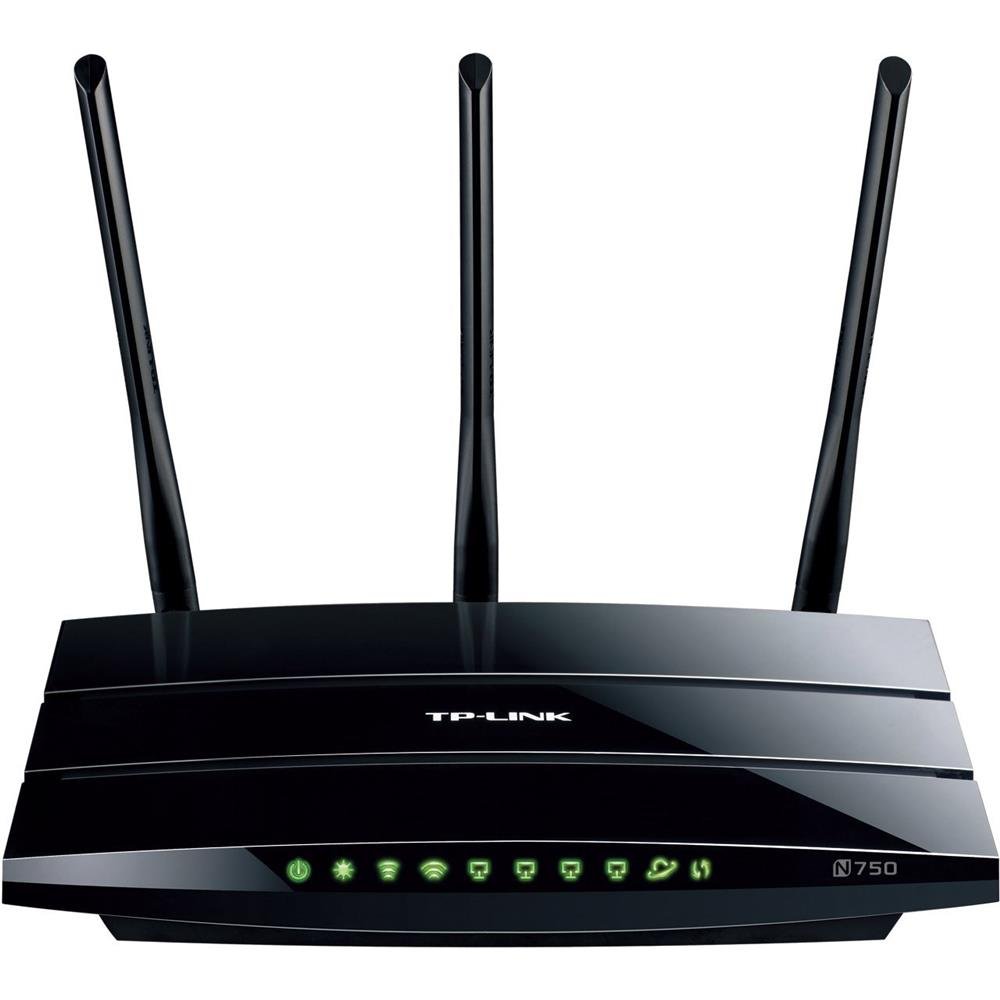
Figura 1: TP-Link TL-WDR4300 N750 Wireless Dual Band Gigabit Router. This image shows the top-down view of the black router with three detachable antennas and front-facing LED indicators.
2. Impostazione
2.1 Contenuto della confezione
- TP-Link TL-WDR4300 Router
- Adattatore di alimentazione
- Cavo Ethernet
- Guida di installazione rapida
- CD delle risorse
2.2 connessione fisica
- Spegni: Scollegare l'alimentazione dal modem e dal router (se applicabile).
- Collegare le antenne: Screw the three detachable antennas onto the corresponding connectors on the rear panel of the router.
- Connetti il modem: Connect an Ethernet cable from your modem's Ethernet port to the blue WAN port on the TL-WDR4300 router.
- Connetti dispositivi: Connect your computer or other wired devices to any of the four yellow LAN ports using Ethernet cables.
- Accensione: Connect the power adapter to the router's power jack and plug it into a power outlet. Power on your modem, then the router. Wait for the LED indicators to stabilize.
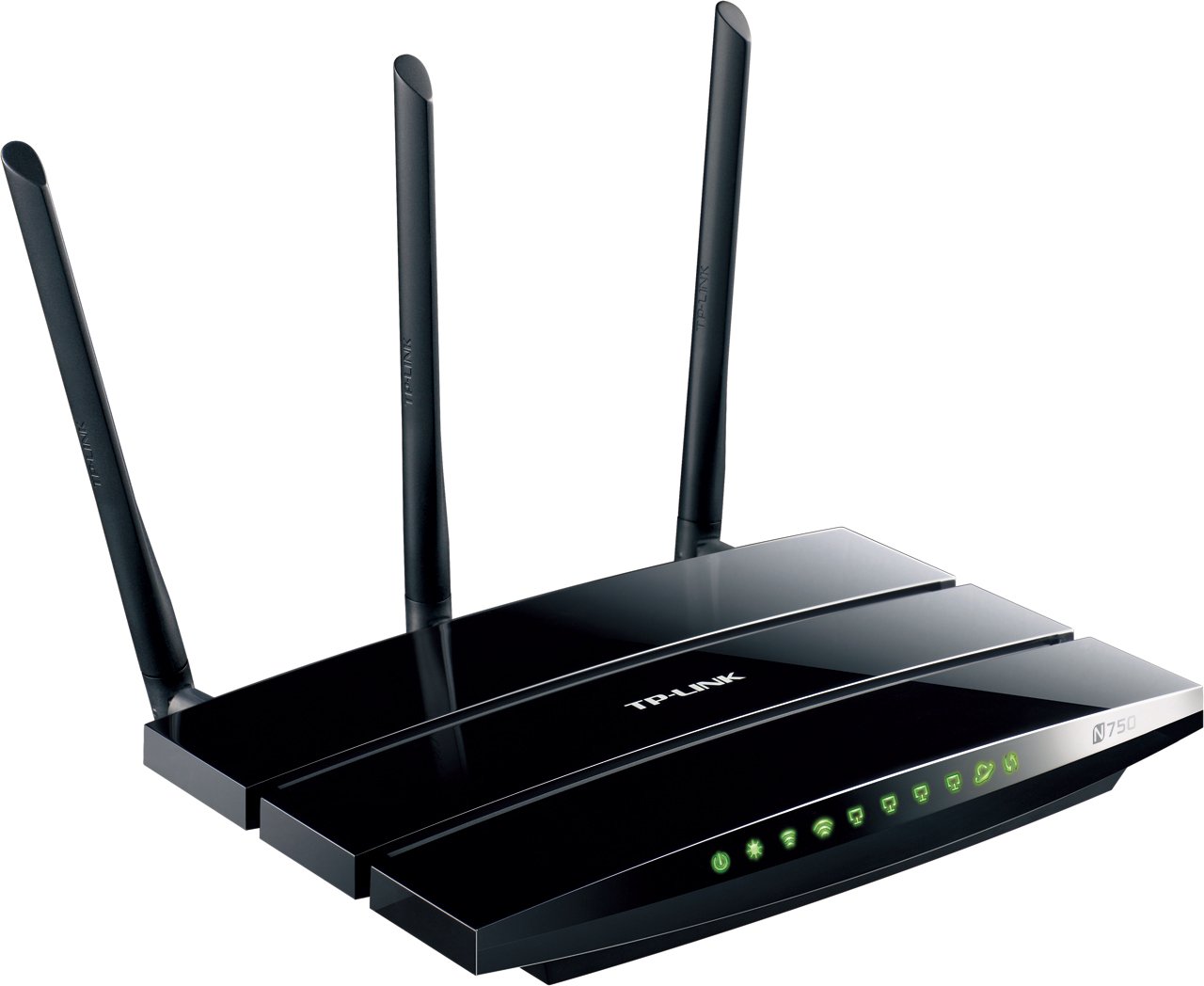
Figura 2: Rear panel connections. This image displays the rear of the router, showing the power input, WAN port (blue), four LAN ports (yellow), two USB 2.0 ports, and the three antenna connectors.
2.3 Configurazione iniziale (Web Interfaccia)
- Router di accesso: Aprire un web browser on a connected computer. In the address bar, type http://tplinkwifi.net or http://192.168.0.1 (O http://192.168.1.1) e premere Invio.
- Login: Inserisci il nome utente e la password predefiniti, che in genere sono amministratore for both. If prompted, change the default password for security.
- Esegui Configurazione rapida: Follow the on-screen instructions of the Quick Setup Wizard to configure your internet connection type and basic wireless settings.
2.4 Configurazione della rete wireless
The TL-WDR4300 operates on two frequency bands:
- Banda da 2.4 GHz: Provides wider coverage and is suitable for general internet use.
- Banda da 5 GHz: Offers higher speeds and less interference, ideal for online gaming and HD video streaming.
During the Quick Setup, you will set up separate SSIDs (network names) and passwords for each band. Ensure you use strong, unique passwords for both.
2.5 WPS (configurazione protetta Wi-Fi)
To quickly connect WPS-compatible devices without entering a password:
- Press the WPS button on the router (usually located on the rear or side panel).
- Within two minutes, press the WPS button on your client device.
- The device will automatically connect to the wireless network.
2.6 Rete ospite
The Guest Network feature provides secure Wi-Fi access for guests without sharing your main network's password or resources. This can be configured via the router's web interface under the "Guest Network" settings.
3. Funzionamento
3.1 Dual Band Wireless Functionality
The TL-WDR4300 operates simultaneously on both 2.4 GHz and 5 GHz wireless bands. This allows for flexible network management:
- Utilizzare il Banda da 2.4 GHz for devices that require wider range or are older, such as smartphones, tablets, and general web la navigazione.
- Utilizzare il Banda da 5 GHz for bandwidth-intensive applications like HD video streaming, online gaming, and large file transfers, which benefit from higher speeds and reduced interference.
3.2 USB Sharing Ports
The router is equipped with two USB 2.0 ports, enabling various sharing functionalities:
- Condivisione stampante: Connect a USB printer to the router to make it accessible to all connected devices on your network.
- File Condivisione: Attach a USB storage device (flash drive or external hard drive) to share files and media across your local network or remotely via an FTP server.
- Server multimediale: Configure the router as a media server to stream content from a connected USB storage device to compatible devices (e.g., smart TVs, media players) on your network.
3.3 porte Gigabit Ethernet
The TL-WDR4300 features one Gigabit WAN port and four Gigabit LAN ports. These ports provide high-speed wired connections, which are essential for:
- Connecting desktop computers, gaming consoles, and network-attached storage (NAS) devices.
- Ensuring optimal performance for latency-sensitive applications like online gaming and large data transfers.
3.4 IP QoS (Quality of Service)
IP QoS allows you to manage and prioritize bandwidth for specific devices or applications. This ensures that critical applications receive sufficient bandwidth, preventing network congestion and maintaining performance for all users. Configuration is available in the router's web interfaccia.
3.5 Controllo genitori
The Parental Controls feature enables you to restrict access to certain websites or limit internet usage times for specific devices on your network. This helps in managing internet access for children or employees. Settings are accessible through the router's web pagina di gestione.
4. Manutenzione
4.1 Aggiornamenti firmware
Controllare regolarmente e installare gli aggiornamenti del firmware dal sito ufficiale TP-Link website. Firmware updates can improve performance, add new features, and address security vulnerabilities. Always follow the instructions provided with the firmware update carefully to avoid damaging the device.
- Download the latest firmware for your specific model (TL-WDR4300) from the TP-Link support websito.
- Accedi al router web interfaccia.
- Passare alla sezione "Strumenti di sistema" o "Aggiornamento firmware".
- Carica il firmware scaricato file and follow the prompts. Do not power off the router during the upgrade process.
4.2 Ripristino delle impostazioni di fabbrica
A factory reset restores the router to its default settings. This can be useful for troubleshooting persistent issues or when reconfiguring the router. There are two methods:
- Ripristino hardware: With the router powered on, press and hold the Reset button (usually a small pinhole button on the rear panel) for approximately 10 seconds until the system LED flashes rapidly. Release the button and wait for the router to restart.
- Ripristino software: Accedi al router web interface, navigate to "System Tools" > "Factory Defaults," and click "Restore."
Note: Performing a factory reset will erase all custom configurations, including Wi-Fi settings and passwords.
4.3 Pulizia fisica
Keep the router clean and free from dust to ensure proper ventilation and prevent overheating. Use a soft, dry cloth to wipe the exterior. Do not use liquid cleaners or abrasive materials.
5. Risoluzione Dei Problemi
5.1 Nessun accesso a Internet
- Controllare le connessioni: Assicurarsi che tutti i cavi Ethernet siano collegati saldamente, in particolare quello che va dal modem alla porta WAN del router.
- Stato del modem: Verifica che il modem funzioni correttamente e che la connessione Internet sia attiva.
- LED del router: Controlla il LED WAN sul router. Se è spento o rosso, potrebbe esserci un problema con la connessione Internet del tuo ISP o modem.
- Riavviare: Power cycle your modem and router (unplug, wait 30 seconds, plug back in modem first, then router).
- Clona indirizzo MAC: Alcuni ISP richiedono la clonazione dell'indirizzo MAC. Accedi al router web interfaccia e controllare le impostazioni WAN per questa opzione.
5.2 Velocità wireless lenta
- Selezione della banda: Ensure devices requiring high speed are connected to the 5 GHz network.
- Interferenza: Move the router away from devices that emit radio frequency interference (e.g., cordless phones, microwaves, Bluetooth devices).
- Ottimizzazione del canale: In the router's wireless settings, try changing the wireless channel for both 2.4 GHz and 5 GHz bands to a less congested one.
- Posizionamento del router: Position the router in a central location, away from obstructions, and elevate it if possible.
- Firmware: Assicurarsi che il firmware del router sia aggiornato.
5.3 Impossibile connettersi al Wi-Fi
- Controlla la password: Verify that you are entering the correct Wi-Fi password (WPA/WPA2-PSK key).
- Trasmissione SSID: Ensure the SSID (network name) is being broadcast. If hidden, manually enter the SSID.
- WPS: Try connecting using the WPS button if your device supports it.
- Tipo di protezione: Confirm that your device supports the security type configured on the router (e.g., WPA2-PSK).
- Ripristino di fabbrica: If all else fails, perform a factory reset and reconfigure the router.
6. Specifiche
| Caratteristica | Dettaglio |
|---|---|
| Marca | TP-Link |
| Modello | TL-WDR4300 |
| Standard wireless | IEEE 802.11a / b / g / n |
| Frequenza | 2.4 GHz e 5 GHz (doppia banda) |
| Velocità di trasferimento dati | Up to 750 Mbps (300 Mbps at 2.4 GHz, 450 Mbps at 5 GHz) |
| Porte Ethernet | 1x Gigabit WAN, 4x Gigabit LAN |
| Porte USB | 2 porte USB 2.0 |
| Antenne | 3x Detachable Dual Band Antennas |
| Dimensioni (L x P x A) | Dimensioni: 24.3 x 16.06 x 3.25 cm |
| Peso dell'articolo | 213 grammi |
| Voltage | 12 Volt (CC) |
7. Garanzia e supporto
7.1 Informazioni sulla garanzia
TP-Link products are covered by a limited warranty. The specific terms and duration of the warranty may vary by region and product. Please refer to the warranty card included with your product or visit the official TP-Link websito per informazioni dettagliate sulla garanzia applicabile al tuo acquisto.
7.2 Supporto tecnico
Per assistenza tecnica, registrazione del prodotto o per scaricare i driver e il firmware più recenti, visitare il supporto ufficiale TP-Link websito:
You may also find answers to common questions and troubleshooting tips in the FAQ section of the support websito.