1. Introduzione
This manual provides detailed instructions for the installation, configuration, operation, and maintenance of your D-Link DNS-320L Cloud Storage 2-Bay Network Attached Storage (NAS) device. Please read this manual thoroughly before using the device to ensure proper setup and optimal performance. The DNS-320L is designed to provide a centralized storage solution for your home or small office network, offering data redundancy, remote access, and media streaming capabilities.
2. Informazioni sulla sicurezza
- Assicurarsi che il dispositivo sia posizionato su una superficie stabile e piana per evitare cadute accidentali.
- Non esporre il dispositivo ad acqua, umidità o temperature estreme.
- Use only the power adapter supplied with the device. Using an incorrect adapter may damage the device and void the warranty.
- Non aprire il dispositivo casing. Affidare tutti gli interventi di manutenzione a personale qualificato.
- Mantenere le aperture di ventilazione libere per evitare il surriscaldamento.
- Disconnect the power cable before cleaning or moving the device.
3. Contenuto della confezione
Verifica che il pacco contenga i seguenti articoli:
- D-Link DNS-320L Cloud Storage 2-Bay NAS Enclosure
- Adattatore di alimentazione
- Cavo Ethernet
- Guida di installazione rapida
- Resource CD (may include software and full manual)
Se qualche articolo risulta mancante o danneggiato, contattare il rivenditore o l'assistenza D-Link.
4. Fisico oltreview
Familiarize yourself with the ports, buttons, and indicators on your DNS-320L device.
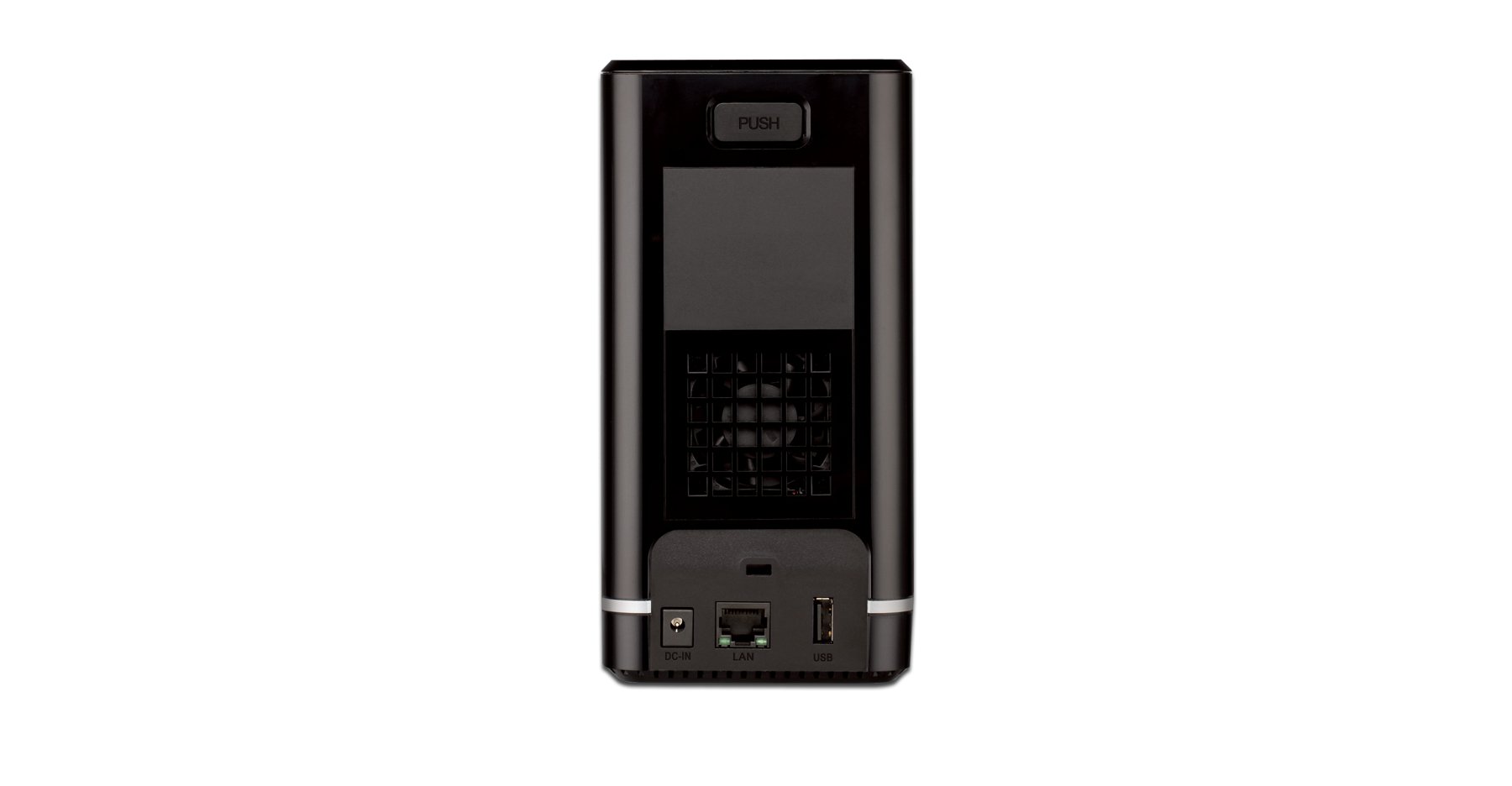
Figura 4.1: Fronte View of D-Link DNS-320L. This image displays the front panel of the DNS-320L, typically showing LED indicators for power, network activity, and hard drive status. It may also feature a power button and a USB port for quick access.
4.1 Pannello frontale
- LED di potenza: Indica lo stato dell'alimentazione.
- HDD 1/2 LEDs: Indicate hard drive activity and status for each bay.
- Porta USB: For connecting external USB storage devices or printers.
- Pulsante di accensione: Per accendere/spegnere il dispositivo.
4.2 Pannello posteriore
- Porta Gigabit: Connects the NAS to your network router or switch.
- Connettore di alimentazione: Per collegare l'adattatore di alimentazione.
- Pulsante di reset: Used to restore factory default settings (requires a paperclip or similar pointed object).
- Slot per blocco Kensington: Per la sicurezza fisica.
5. Installazione hardware
This section guides you through installing hard drives and connecting the DNS-320L to your network.
5.1 Installazione di dischi rigidi
The DNS-320L supports two 3.5-inch SATA hard drives. Ensure your drives are compatible and unformatted for initial setup.
- Ensure the DNS-320L is powered off and disconnected from the power outlet.
- Gently slide open the front cover of the NAS enclosure.
- Slide each hard drive into an available bay until it clicks into place, ensuring the SATA connectors align properly. No screws are typically required for tool-less installation.
- Chiudere saldamente il coperchio anteriore.
Figure 5.1: Hard Drive Installation. This image illustrates the process of inserting a 3.5-inch SATA hard drive into one of the bays of the DNS-320L, highlighting the tool-less design.
5.2 Connecting the NAS to Your Network
- Connect one end of the Ethernet cable to the Gigabit Ethernet port on the rear of the DNS-320L.
- Collega l'altra estremità del cavo Ethernet a una porta LAN disponibile sul router o sullo switch di rete.
- Connect the power adapter to the power connector on the rear of the DNS-320L, then plug the adapter into a power outlet.
- Press the Power button on the front panel to turn on the device. The Power LED will illuminate, and the HDD LEDs will flash during startup.
6. Configurazione iniziale
After hardware installation, you will need to configure the DNS-320L using its webinterfaccia di gestione basata su.
6.1 Accesso al Web Interfaccia
- Ensure your computer is connected to the same network as the DNS-320L.
- Aprire un web browser (ad esempio, Chrome, Firefox, Edge).
- The DNS-320L typically obtains an IP address automatically via DHCP. You can use the D-Link ShareCenter Utility (if provided on the Resource CD or D-Link website) to discover its IP address. Alternatively, try accessing
http://dlinksharecenterorhttp://dlinksharecenter.local. - Inserisci il nome utente predefinito (di solito
admin) and leave the password blank (oradmin) to log in for the first time. You will be prompted to change the password.
6.2 Running the Setup Wizard
Upon first login, a setup wizard will guide you through essential configurations:
- Disk Volume Creation: You will be prompted to create a disk volume. Options typically include:
- Standard: Each drive is treated as a separate volume.
- RAID 0 (striping): Combines drives for maximum capacity and performance, but offers no data redundancy. If one drive fails, all data is lost.
- RAID 1 (mirroring): Mirrors data across both drives, providing data redundancy. If one drive fails, data is preserved on the other. Capacity is limited to the size of one drive.
- JBOD (Just a Bunch Of Disks): Combines drives into a single large volume sequentially. No performance or redundancy benefits.
Choose RAID 1 for data protection. RAID 0 offers speed but no protection.
- User Account Creation: Create at least one user account with administrative privileges.
- Impostazioni di rete: Confirm or adjust network settings (DHCP or static IP).
- Fuso orario: Imposta la data e l'ora corrette.
7. Operating the DNS-320L
This section covers common operational tasks for your NAS.
7.1 Accessing Shared Folders
After setup, shared folders will be accessible from your network:
- Finestre: Aprire File Explorer, type
\DNS-320L(or its IP address) in the address bar, and press Enter. - Mac OS: In Finder, go to Vai> Connetti al server, tipo
smb://DNS-320L(or its IP address), and click Connect. - Linux: Usa il tuo file manager's network browsing feature or mount the share using SMB/CIFS.
7.2 User and Group Management
Manage who can access your NAS and what permissions they have:
- Accedi al web interface as an administrator.
- Vai a Management > User Management or similar section.
- Create new users, assign passwords, and add them to groups.
- Configure folder permissions for users and groups (Read/Write, Read Only, No Access).
7.3 Cloud Access and Remote Management
The DNS-320L supports D-Link's Cloud features for remote access.
- Register your device with the D-Link Cloud service (if applicable, refer to D-Link's official documentation for specific steps).
- Use the D-Link mobile app (e.g., mydlink ShareCenter) to access files remotely from your smartphone or tablet.
- Configure port forwarding on your router if direct remote access to the web interface is desired (advanced users only, consult your router manual).
7.4 USB Device Functionality
The USB 2.0 port on the front panel can be used for:
- Archiviazione esterna: Connect USB hard drives or flash drives to expand storage or for backup purposes. These devices will appear as shared folders.
- Stampante USB: Connect a compatible USB printer to share it across your network.
8. Manutenzione
Regular maintenance ensures the longevity and reliability of your DNS-320L.
8.1 Aggiornamenti firmware
Periodically check for and install firmware updates from the D-Link support website. Firmware updates can provide new features, performance improvements, and security patches.
- Scarica l'ultimo firmware file for your DNS-320L model from the official D-Link support site.
- Log in to the NAS web interface as an administrator.
- Vai a Management > Firmware Upgrade or a similar section.
- Passare al firmware scaricato file and initiate the upgrade process. Do not power off the device during the update.
8.2 Backup dei dati
While RAID 1 provides redundancy against a single drive failure, it is not a substitute for a comprehensive backup strategy. Regularly back up critical data from your NAS to an external drive or another storage location.
8.3 Pulizia
Keep the device clean to ensure proper airflow and prevent dust buildup.
- Spegnere e scollegare il dispositivo prima della pulizia.
- Per pulire l'esterno, utilizzare un panno morbido e asciutto.
- Utilizzare aria compressa per eliminare la polvere dalle aperture di ventilazione.
9. Risoluzione Dei Problemi
This section addresses common issues you might encounter with your DNS-320L.
| Problema | Possibile soluzione |
|---|---|
| Il dispositivo non si accende. | Assicurarsi che l'adattatore di alimentazione sia collegato saldamente sia al dispositivo sia a una presa di corrente funzionante. Provare la presa con un altro dispositivo. |
| Cannot access the NAS on the network. | Verify the Ethernet cable is properly connected. Check network settings on your computer and router. Ensure the NAS has an IP address (use the D-Link utility). Try restarting the NAS and your router. |
| Hard drive LED is red or flashing abnormally. | This may indicate a drive error or failure. Check the NAS web interface for drive status. If a drive has failed in a RAID 1 configuration, replace the faulty drive and rebuild the array. |
| Password amministratore dimenticata. | Use the reset button on the rear panel to restore factory default settings. Warning: This will erase all configurations, but typically not data on the drives. You will need to reconfigure the NAS. |
| Lento file velocità di trasferimento. | Ensure all network components (NAS, router, computer) support Gigabit Ethernet. Check for network congestion or faulty cables. |
10. Specifiche
Key technical specifications for the D-Link DNS-320L:
| Caratteristica | Dettaglio |
|---|---|
| Numero di modello | DNS-320L |
| Alloggiamenti unità | 2 x 3.5-inch SATA I/II/III HDD |
| Supporto RAID | Standard, JBOD, RAID 0, RAID 1 |
| Interfaccia di rete | 1 Gigabit Ethernet (10/100/1000 Mbps) |
| Porte USB | 1 porte USB 2.0 |
| Piattaforma hardware | Mac, PC |
| Dimensioni (LxWxH) | 3.54 x 5.68 x 7.61 pollici |
| Peso dell'articolo | 1.39 pounds (without drives) |
| Colore | Nero |
| Materiale | Metallo |
| Dispositivi compatibili | CPU, Desktop, Laptop, Server |
11. Garanzia e supporto
Per informazioni sulla garanzia, fare riferimento alla scheda di garanzia inclusa con il prodotto o visitare il sito ufficiale D-Link website. D-Link provides technical support and resources to assist you with your DNS-320L.
- Supporto online: Visita www.dlink.com/support for FAQs, troubleshooting guides, firmware downloads, and product documentation.
- Supporto tecnico: Contact D-Link technical support for assistance with installation, configuration, or troubleshooting issues that cannot be resolved using this manual or online resources. Contact details are available on the D-Link support websito per la tua regione.


