1. Introduzione
This manual provides detailed instructions for the installation, operation, and maintenance of the Cotek SP-1000-224 Pure Sine Wave Inverter. This inverter is designed to convert 24VDC power to 230VAC, providing a stable and reliable power source for various applications.
Caratteristiche principali:
- Uscita a onda sinusoidale pura per dispositivi elettronici sensibili.
- Capacità di controllo remoto di accensione/spegnimento (terminale verde).
- Ingresso e uscita completamente isolati per una maggiore sicurezza.
- Ventola di raffreddamento controllata in base alla temperatura e al carico per prestazioni ottimali.
- Interfaccia intuitiva.
- Output frequency (50/60 Hz) selectable via DIP switch.
- Volume di uscitatage selectable via DIP switch.
- Power saving mode adjustable via variable resistor.
- 3-color LED status indicators for easy monitoring.
- Comprehensive input protection: Reverse Polarity (Fuse), Under Voltage, oltre il volumetage.
- Robust output protection: Short Circuit, Overload, Over Temperature.
- Type 1 Indoor Aluminum Enclosure.
- E13 / UL / CE / FCC approved.
2. Informazioni sulla sicurezza
WARNING: Please read and understand all safety instructions before installing or operating this inverter. Failure to follow these instructions may result in electric shock, fire, serious injury, or death.
- Rischio elettrico: This unit produces high voltage. Do not open the inverter casing. Affidare tutti gli interventi di manutenzione a personale qualificato.
- Sicurezza della batteria: Work in a well-ventilated area. Batteries can produce explosive gases. Do not smoke or allow sparks or flames near the battery.
- Ventilazione adeguata: Assicurare un adeguato flusso d'aria attorno all'inverter. Non ostruire le aperture di ventilazione.
- Condizioni ambientali: Do not expose the inverter to rain, moisture, or excessive dust. Operate in a dry, cool environment.
- Messa a terra: The inverter must be properly grounded. Follow all local and national electrical codes.
- Capacità di carico: Non superare la potenza nominale dell'inverter. Il sovraccarico può causare danni all'inverter e ai dispositivi collegati.
- Avvertenza sulla Proposta 65 della California: Questo prodotto potrebbe contenere materiali vietati dalla Proposta 65 della California.
3. Prodotto finitoview e componenti
Familiarize yourself with the various parts of your Cotek SP-1000-224 Pure Sine Wave Inverter.

Figura 3.1: Angolato view of the Cotek SP-1000-224 Pure Sine Wave Inverter, showing its blue aluminum casing and grey end caps with ventilation and connection ports.

Figura 3.2: Front panel of the inverter, featuring the AC output socket (Schuko type), a power switch, LED indicators, and DIP switches for configuration.

Figura 3.3: Rear panel of the inverter, showing the DC input terminals for battery connection, a remote control port (RJ45), and a green terminal block for remote ON/OFF control.

Figura 3.4: Lato view of the inverter, highlighting its robust blue aluminum heat sink casing progettato per un'efficiente dissipazione del calore.
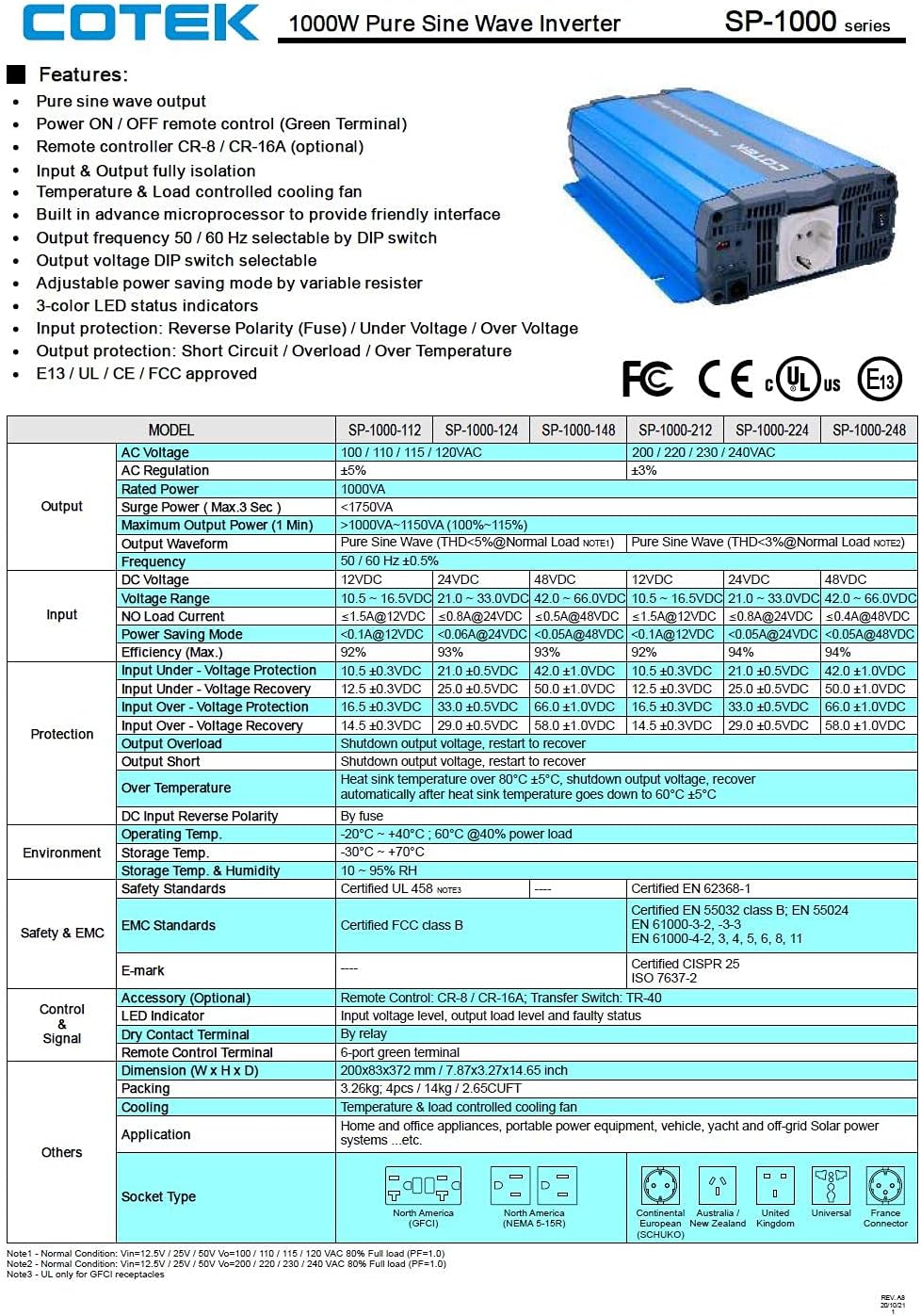
Figura 3.5: A detailed table outlining the features and technical specifications of the Cotek SP-1000 series inverters, including input/output parameters, protections, and certifications.

Figura 3.6: Mechanical drawings providing dimensions of the inverter, along with power voltage and power temperature curves illustrating performance characteristics.
4. Configurazione e installazione
4.1 Scelta della posizione:
- Installare l'inverter in un luogo asciutto, fresco e ben ventilato.
- Evitare la luce solare diretta, le fonti di calore e l'umidità.
- Ensure sufficient clearance around the inverter for proper airflow, especially around the cooling fan and ventilation openings.
- Montare l'inverter in modo sicuro su una superficie stabile e non combustibile.
4.2 DC Input Connection:
- Assicurarsi che l'interruttore di alimentazione dell'inverter sia in posizione OFF.
- Connect the positive (+) terminal of the 24VDC battery bank to the positive (+) DC input terminal on the inverter.
- Connect the negative (-) terminal of the 24VDC battery bank to the negative (-) DC input terminal on the inverter.
- Use appropriately sized cables to minimize voltage drop and ensure safe operation. Refer to electrical standards for cable sizing.
- Assicurarsi che tutti i collegamenti siano ben saldi e sicuri.
4.3 AC Output Connection:
- Plug your AC appliances directly into the AC output socket on the inverter.
- Ensure the total power consumption of all connected appliances does not exceed the inverter's 1000W continuous output rating.
4.4 Messa a terra:
Proper grounding is essential for safety. Connect the inverter's chassis ground terminal to a reliable earth ground using a suitable grounding wire. Consult local electrical codes for specific grounding requirements.
4.5 Remote Control (Optional):
The inverter supports remote ON/OFF control via the green terminal block or an optional RJ45 remote control unit. Refer to the accessory manual for detailed instructions on connecting and using the remote control.
4.6 DIP Switch Configuration:
The inverter features DIP switches on the front panel to select output frequency (50/60 Hz) and output voltage. Refer to the table below for common settings. Ensure the inverter is OFF before changing DIP switch settings.
| Collocamento | Posizione dell'interruttore DIP |
|---|---|
| Frequenza di uscita 50 Hz | Switch 1: OFF, Switch 2: OFF (Example, refer to actual product manual/Figure 3.5) |
| Frequenza di uscita 60 Hz | Switch 1: ON, Switch 2: OFF (Example, refer to actual product manual/Figure 3.5) |
| Volume di uscitatage 230 V CA | Switch 3: ON, Switch 4: OFF (Example, refer to actual product manual/Figure 3.5) |
Note: The exact DIP switch configurations for specific voltage and frequency settings are detailed in the product's full technical specifications (refer to Figure 3.5). Always verify settings before operation.
5. Funzionamento
5.1 Powering On the Inverter:
- Ensure all DC and AC connections are secure and correct.
- If using the remote control, ensure it is connected and in the ON position.
- Flip the main power switch on the inverter's front panel to the "ON" position.
- Observe the 3-color LED status indicators. A green light indicates normal operation.
5.2 LED Status Indicators:
- Verde: Funzionamento normale.
- Giallo/ambra: Warning (e.g., input voltage slightly low/high, minor overload). The inverter may continue to operate but requires attention.
- Rosso: Fault condition (e.g., severe overload, short circuit, over-temperature, critical input voltage). The inverter will shut down to protect itself and connected devices.
5.3 Power Saving Mode:
The inverter features a power saving mode, adjustable via a variable resistor. This mode reduces power consumption when no load or a very light load is detected. Adjust the resistor to set the sensitivity for entering/exiting power saving mode.
5.4 Powering Off the Inverter:
- Turn off all connected AC appliances.
- Flip the main power switch on the inverter's front panel to the "OFF" position.
- If using a remote control, turn it off as well.
6. Manutenzione
Una manutenzione regolare garantisce la longevità e il funzionamento affidabile del vostro inverter.
- Pulizia: Pulire periodicamente l'esterno dell'inverter con un panno asciutto e morbido. Non utilizzare detergenti liquidi o solventi. Assicurarsi che le aperture di ventilazione siano libere da polvere e detriti.
- Connessioni: Periodically check all DC and AC connections to ensure they are tight and free from corrosion. Loose connections can cause overheating and poor performance.
- Ventilazione: Ensure the cooling fan and ventilation grilles are not obstructed. The fan operates based on temperature and load, so ensure it can draw and expel air freely.
- Stato della batteria: Monitor the health of your battery bank. A weak or failing battery can negatively impact inverter performance and lifespan.
WARNING: Do not attempt to service the inverter yourself. There are no user-serviceable parts inside. Refer all servicing to qualified personnel.
7. Risoluzione Dei Problemi
This section provides solutions to common issues you might encounter with your inverter. If the problem persists after following these steps, contact customer support.
| Problema | Possibile causa | Soluzione |
|---|---|---|
| Inverter does not turn on (No LED indication) |
|
|
| Red LED is on, inverter shuts down |
|
|
| Yellow/Amber LED is on |
|
|
| Nessuna uscita CA |
|
|
8. Specifiche tecniche
The following table provides detailed technical specifications for the Cotek SP-1000-224 Pure Sine Wave Inverter. For a comprehensive overview, refer to Figure 3.5.
| Parametro | Value (SP-1000-224) |
|---|---|
| Modello | SP-1000-224 |
| Volume di uscita CAtage | 230VAC (selectable) |
| Ingresso CC Voltage | 24 V CC |
| Potenza continua | 1000W |
| Surge Power (3 sec) | 1750VA |
| Forma d'onda di uscita | Onda sinusoidale pura (THD < 3%) |
| Frequenza di uscita | 50/60 Hz (selezionabile) |
| Efficiency (Max) | 92% |
| Ingresso sotto Voltage Protezione | 21.0 ± 0.5 V CC |
| Ingresso su Voltage Protezione | 33.0 ± 0.5 V CC |
| Temperatura di esercizio | -20°C ~ +40°C (60% power load) |
| Dimensioni (L x P x A) | 17 x 10 x 6 pollici (circa) |
| Peso | 8.94 libbre |
| Certificazioni | Approvato E13 / UL / CE / FCC |
Note: Specifications are subject to change without notice. Always refer to the product label or manufacturer's official documentation for the most accurate and up-to-date information.
9. Informazioni sulla garanzia
COTEK products are manufactured to high quality standards. For specific warranty terms and conditions, including duration and coverage, please refer to the warranty card included with your product or visit the official COTEK websito. Conservare la prova d'acquisto per eventuali reclami in garanzia.
Typical warranties cover defects in materials and workmanship under normal use. Damage caused by improper installation, misuse, abuse, or unauthorized modifications is generally not covered.
10. Assistenza clienti
If you have any questions, require technical assistance, or need to report an issue with your Cotek SP-1000-224 Pure Sine Wave Inverter, please contact COTEK customer support or your authorized dealer.
Quando contatti l'assistenza, tieni a portata di mano le seguenti informazioni:
- Product Model: SP-1000-224
- Serial Number (if applicable, usually found on the product label)
- Data di acquisto
- Una descrizione dettagliata del problema riscontrato.
For the most up-to-date contact information, please visit the official COTEK websito: www.cotek.com.tw (Questo è un segnaposto URL, si prega di verificare il produttore effettivo webposto).


