1. Introduzione
This manual provides comprehensive instructions for the setup, operation, and maintenance of your Xprinter XP-Q801K Thermal Receipt Printer. This printer is designed for efficient and reliable receipt printing in various business environments, featuring high-speed direct thermal printing and a USB interface for easy connectivity.

Figura 1: Fronte view of the Xprinter XP-Q801K Thermal Receipt Printer, showing the paper output slot and control buttons.
2. Impostazione
2.1 Disimballaggio
Carefully remove the printer and all accessories from the packaging. Verify that all components are present:
- Xprinter XP-Q801K Thermal Receipt Printer
- Adattatore di alimentazione
- Cavo USB
- Paper Roll (starter)
- Manuale dell'utente (questo documento)
2.2 Collegamento della stampante
Before connecting, ensure the printer is powered off. Locate the ports on the rear of the printer.
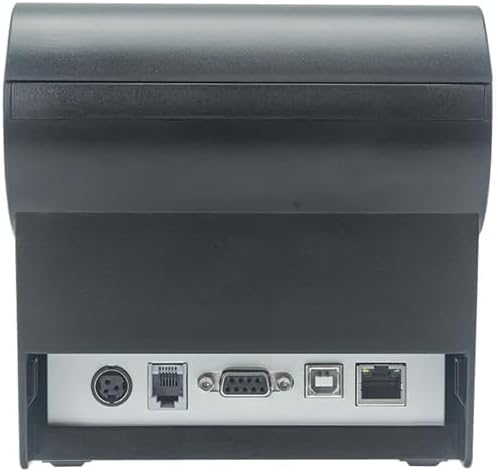
Figura 2: Posteriore view of the printer, highlighting the power, USB, and other interface ports.
- Connetti alimentazione: Insert the power adapter cable into the printer's power input port (DC 24V/2.5A) and plug the adapter into a suitable electrical outlet (AC 100-240V, 50-60Hz).
- Connetti USB: Connect one end of the provided USB cable to the USB port on the printer and the other end to an available USB port on your computer.
- Cash Drawer (Optional): If using a cash drawer, connect its cable to the cash drawer port (DC 24V/1A) on the printer.
2.3 Loading the Paper Roll
The printer uses 80mm wide thermal paper rolls.
- Open the paper cover by pushing the cover open button (usually located on the side or front).
- Insert the thermal paper roll with the printing surface facing the print head. Ensure the roll is seated correctly in the paper compartment.
- Estrarre una piccola quantità di carta dalla taglierina.
- Chiudere saldamente il coperchio della carta finché non scatta in posizione.
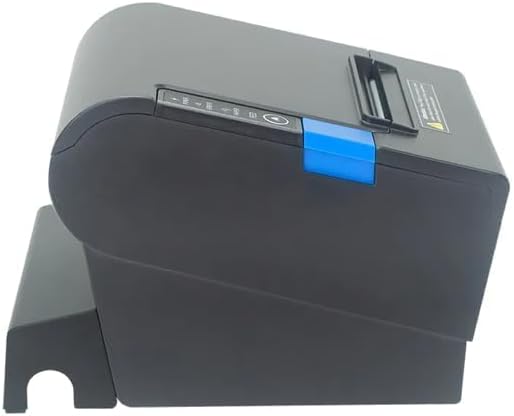
Figura 3: lato view of the printer, illustrating the paper cover mechanism.
2.4 Installazione del driver
The printer requires a driver to communicate with your computer. Drivers are typically available for Windows, Linux, Android, and Mac operating systems.
- For Windows users, the printer often supports plug-and-play installation or requires a specific Windows driver.
- For Linux, Android, and Mac, SDKs (Software Development Kits) are usually provided for integration.
Fare riferimento al produttore website or the included driver CD/USB drive for the latest drivers and installation instructions specific to your operating system.
3. Utilizzo della stampante
3.1 Accensione/Spegnimento
Locate the power switch on the side or rear of the printer. Flip the switch to the 'ON' position to power on the printer. The 'POWER' indicator light will illuminate. Flip to 'OFF' to power down.
3.2 Indicator Lights and Buttons
The front panel typically features several indicator lights and buttons:
- ENERGIA: Indicates the printer is powered on.
- ERRORE: Illuminates or flashes to indicate an error condition (e.g., paper out, print head overheating, cutter error).
- CARTA: Indicates that the paper roll is low or out.
- Pulsante ALIMENTAZIONE: Press to manually feed paper. Hold to perform a self-test print (if supported by model).
3.3 Stampa di base
Once the printer is connected and drivers are installed, you can print receipts from your POS software or application. Ensure the printer is selected as the default or active printer in your system settings.
The printer supports various print speeds up to 300 mm/s and automatic paper cutting after each print job.
4. Manutenzione
Una manutenzione regolare garantisce prestazioni ottimali e prolunga la durata della stampante.
4.1 Pulizia della testina di stampa
The print head should be cleaned regularly, especially if print quality degrades.
- Spegnere la stampante e scollegare il cavo di alimentazione.
- Aprire il coperchio di carta.
- Utilizzare un batuffolo di cotone leggermenteampened with isopropyl alcohol (ethanol) to gently wipe the thermal elements of the print head.
- Lasciare asciugare completamente la testina di stampa prima di chiudere il coperchio e ricollegare l'alimentazione.
4.2 Cleaning the Cutter
Paper dust can accumulate around the cutter blade, affecting its performance.
- Spegnere la stampante e scollegare il cavo di alimentazione.
- Carefully remove any visible paper dust or debris from around the cutter blade using a soft brush or compressed air.
- Do not use liquids on the cutter.
4.3 Pulizia generale
Pulire l'esterno della stampante con un panno morbido eamp stoffa. Evitare l'uso di prodotti chimici aggressivi o detergenti abrasivi.
5. Risoluzione Dei Problemi
Questa sezione affronta i problemi più comuni che potresti riscontrare con la tua stampante.
| Problema | Possibile causa | Soluzione |
|---|---|---|
| La stampante non si accende. | Cavo di alimentazione non collegato; Presa di corrente difettosa; Interruttore di alimentazione spento. | Ensure power cable is securely connected. Test power outlet. Turn power switch to 'ON'. |
| No printing. | Paper out; Paper loaded incorrectly; Driver not installed or incorrect; USB cable loose; Printer not selected. | Load new paper roll. Re-load paper correctly. Install/reinstall correct driver. Check USB connection. Select printer in software. |
| ERROR light is on/flashing. | Paper out; Paper jam; Print head overheating; Cutter error. | Load paper. Clear paper jam. Allow printer to cool down. Check cutter for obstructions. |
| Qualità di stampa scadente. | Dirty print head; Low quality paper; Old paper roll. | Clean the print head (see Section 4.1). Use high-quality thermal paper. Replace old paper rolls. |
Se il problema persiste dopo aver provato queste soluzioni, contattare l'assistenza clienti.
6. Specifiche
| Caratteristica | Dettaglio |
|---|---|
| Metodo di stampa | Termico diretto |
| Larghezza della carta | 80 millimetri |
| Velocità di stampa | 230 mm / s, 260 mm / s, 300 mm / s |
| Interfaccia | USB |
| Interlinea | 3.75 mm (adjustable by commands) |
| Character Size (ANK) | Font A: 1.5 × 3.0 mm (12 × 24 dots) Font B: 1.1 × 2.1 mm (9 × 17 dots) |
| Character Size (Chinese/Traditional Chinese) | 3.0 × 3.0 mm (24 × 24 dots) |
| Tipi di codici a barre | UPC-A / UPC-E / JAN13 (EAN13) / JAN8 (EAN8) / CODE39 / ITF / CODABAR / CODE93 / CODE128 |
| Codice a barre 2D | QR Code / PDF417 |
| NV Flash Memory | 256 KB |
| Potenza in ingresso | AC 100-240V, 50-60Hz |
| Potenza di uscita | CC 24V/2.5A |
| Uscita del cassetto contanti | CC 24V/1A |
| Peso | 1.0 kg |
| Dimensioni (P × L × A) | Dimensioni: 194.5 × 145 × 146.4 mm |
| Temperatura di esercizio | Temperatura da 0 a 45°C |
| Umidità di esercizio | 10~80% UR |
| Vita della taglierina | 1.5 milione di tagli |
| Vita della testina di stampa | 150 chilometri |
| Compatibilità del sistema operativo | Windows, Linux, Android, Mac |


